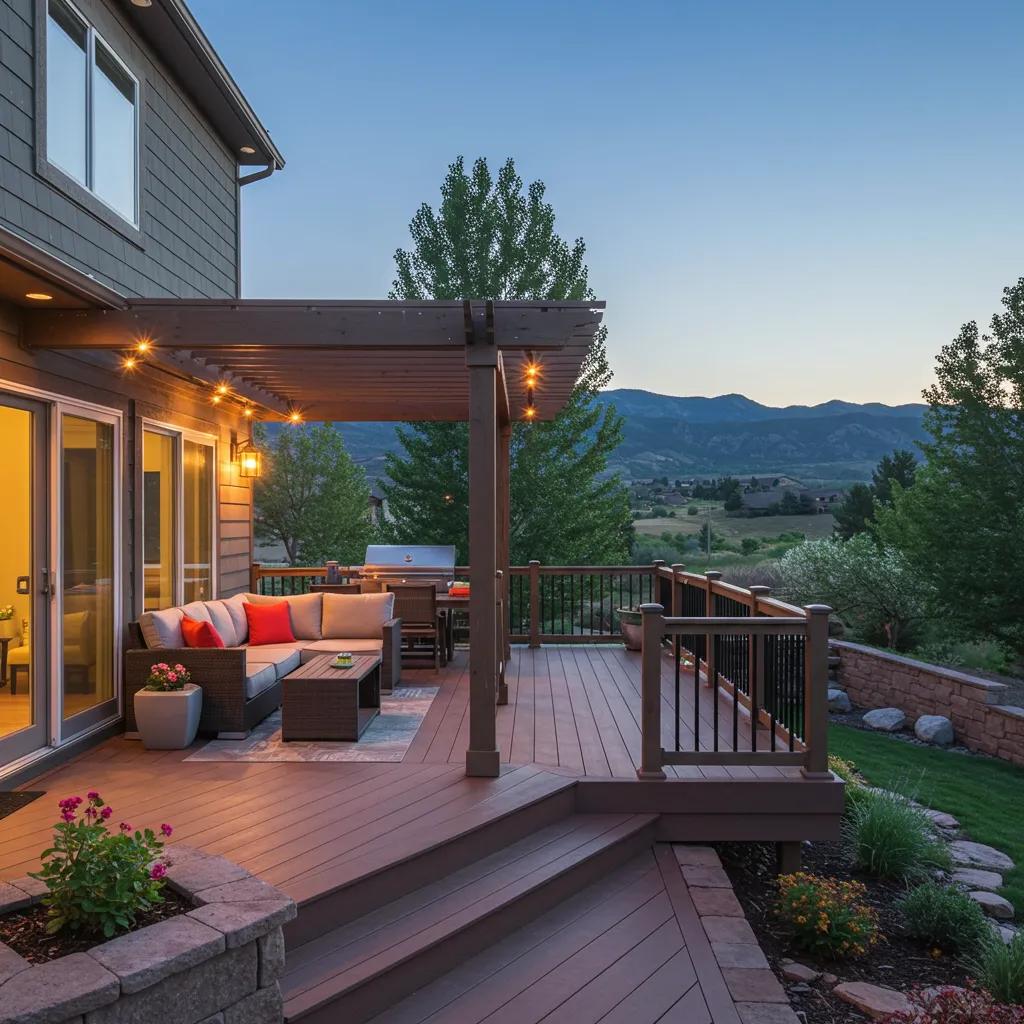
Building a custom deck in Parker, Colorado, means crafting an outdoor oasis perfectly suited to our local environment. We focus on designs that meet Parker’s specific building codes, stand up to intense sun and heavy snow, and transform your yard into a year-round living space. This guide dives into the Parker deck installation process, why our unique climate and terrain demand local expertise, the best materials for lasting beauty, and how to budget wisely for your dream deck. We know navigating permits, tackling sloped yards, and selecting materials that resist Colorado’s harsh UV rays and freeze-thaw cycles can be tricky. That’s why we’re here to offer practical solutions and local insights to make your project smooth and successful. You’ll find a step-by-step breakdown of our contractor-led process, clear cost breakdowns, design ideas that highlight Parker’s breathtaking views, material comparisons tailored to our weather, and tips for keeping your deck looking its best. We’ll cover why partnering with a local Parker deck builder is crucial, how to plan your custom design, the top decking materials, realistic cost expectations, the installation journey with Colorado Elite Outdoor Contractors, essential maintenance advice, and what our satisfied clients in the community have to say. Throughout this guide, you’ll find keywords like “deck installation Parker Colorado,” “deck builders Parker CO,” “Parker CO deck permit requirements,” and “composite decking Parker” to help you find exactly the information you need.
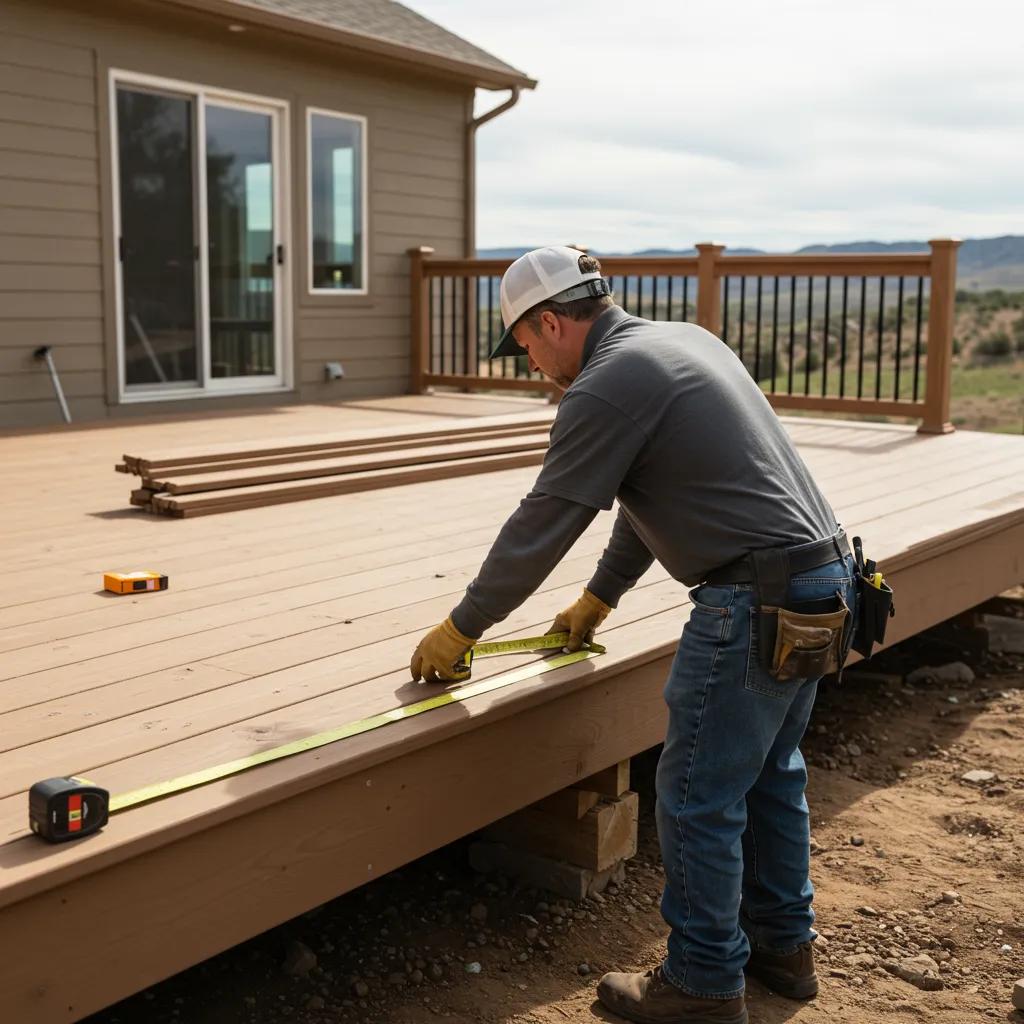
Local deck builders in Parker, CO, bring specialized knowledge to outdoor construction, ensuring your deck’s structure is perfectly adapted to Parker’s altitude, intense UV exposure, and typical lot layouts, which means greater durability and fewer callbacks. By understanding our local soil conditions and frost line depths, we select the right footings and fasteners to prevent seasonal shifting and guarantee safety, delivering enduring value. Choosing a nearby company also simplifies permit coordination with the Town of Parker, cuts down on logistical costs, and provides you with accessible references and prompt service for any future maintenance needs. The following section delves into the specific climate and terrain features that make local expertise indispensable for building reliable decks in Parker.
Parker’s high-altitude sun and dramatic freeze-thaw cycles can accelerate UV damage and stress materials with constant moisture changes, significantly impacting material choices and fastening methods for decks. Our contractors must specify UV-resistant decking, corrosion-proof fasteners, and footings deep enough to handle the local frost line and varied soil types, preventing heaving and board movement. Many Parker properties feature slopes or limited backyard access, often leading designers to recommend multi-level decks, specialized engineered footings, or modular material delivery for efficient staging. A thorough understanding of these conditions directly influences permit and code compliance, which can affect your project’s timeline and required documentation.
A permit is generally required for new decks that exceed specific height or size limits or are attached to your home. The Town of Parker’s building department expects detailed structural plans, footing specifications, and load calculations when necessary. Proper permit application, including site plans, ledger details, and material specifications, helps prevent delays by ensuring all requirements are met. Our team, being intimately familiar with Parker’s submittal process, can help you avoid common resubmission hurdles. Inspections typically follow a set sequence—footing, framing, and final—so planning your project around these checkpoints is key to avoiding construction interruptions. Understanding the permit workflow from the start allows for early documentation preparation and keeps your project moving smoothly toward final approval.
Colorado Elite Outdoor Contractors provides expert Custom Deck Installation Services throughout Parker and surrounding areas, offering invaluable local insights for projects involving composite decking, robust steel framing, engineered footings, and integrated lighting. We proudly serve Parker, Highlands Ranch, Castle Rock, Centennial, Aurora, Elizabeth, Littleton, Englewood, and Denver. Our services include custom touches like picture-frame stairs, cascading stair designs, stylish drink railings, built-in seating, and ambient stair and handrail lighting. Leveraging our deep understanding of Parker’s common lot types and permit expectations, we streamline design choices and efficiently manage inspections. (coloradoeliteoutdoor.com) This local focus translates into practical design planning that maximizes your home’s views and enhances your functional outdoor living space.
Designing a custom deck for your Parker home starts with a thorough site assessment. We evaluate slope, sun exposure, prevailing winds, and key sightlines to determine the optimal layout, orientation, and the best outdoor living features for your property. Clearly defining your functional goals—whether it’s for entertaining, grilling, or a peaceful retreat—will guide decisions on square footage, traffic flow, built-in seating, and the placement of outdoor kitchen or fire pit elements. Integrating HOA rules and landscape considerations early in the planning process prevents costly redesigns and permit revisions down the line. The next section explores popular design approaches for capturing Parker’s stunning views and making the most of smaller or sloped yards.
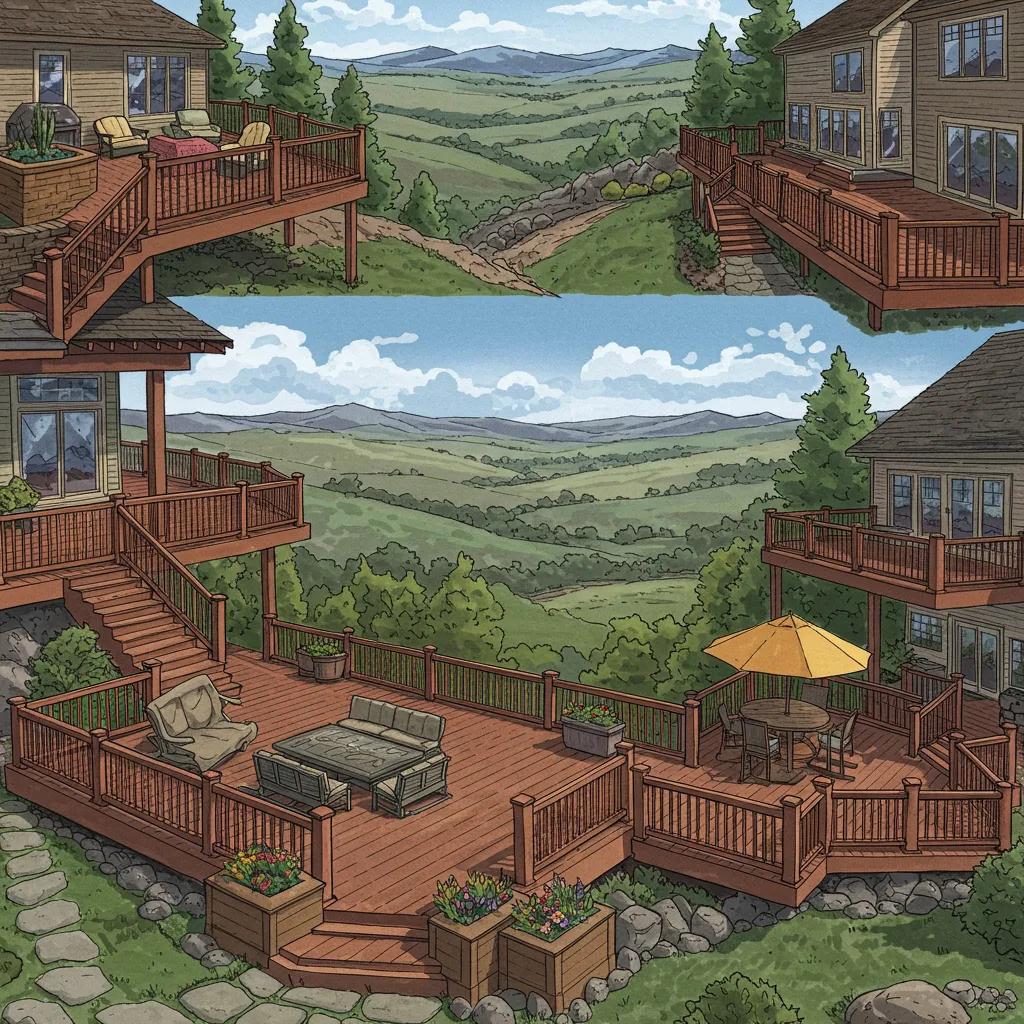
To make the most of Parker’s unique landscape, popular design strategies include multi-level decks that gracefully navigate steep slopes, wraparound decks that capture panoramic sky and mountain vistas, and cantilevered corners that extend viewing platforms without requiring extensive footing work. Built-in benches and integrated planters not only save valuable space but also offer convenient storage and natural windbreaks. Cascading or picture-frame stairs create elegant and safe transitions between different yard levels. Orienting your deck to catch the best morning or evening light, depending on your usage patterns, enhances year-round comfort. For compact lots, consider sleek rooftop or second-story decks to unlock dramatic views. These design concepts naturally lead into how features like pergolas, outdoor kitchens, and fire pits can elevate your deck’s functionality and require careful planning.
Pergolas offer welcome shade on Parker’s bright, sunny days and create a defined outdoor room, while still allowing snow to fall through in winter. They pair beautifully with durable composite decks to create long-lasting shaded areas. Outdoor kitchens significantly expand your deck’s utility but demand careful planning for essential utilities, resilient finishes, and proper ventilation; situating the kitchen near ground-level access or service areas simplifies installation. Fire pits serve as a captivating year-round gathering spot, but must adhere to strict clearance and material guidelines to ensure safety and minimize ember risks, especially on windy evenings. Incorporating these features during the initial design phase allows us to specify necessary structural support, drainage, and clearances upfront, avoiding expensive retrofits later.
Your railing choice is a balance between preserving your view, resisting wind, and ease of maintenance. Cable and glass railing systems offer unobstructed sightlines, while metal and composite rails provide enhanced durability and require less upkeep in our high-UV environment. Local building codes mandate minimum railing heights and baluster spacing for safety. In Parker’s often windy conditions, sturdier posts or reinforced handrail connections might be preferable. Maintenance needs vary—glass requires frequent cleaning, cable systems need occasional tension checks, and composite/metal rails resist rot and corrosion—so consider the long-term upkeep when making your selection. These railing considerations naturally lead into material choices that dictate your deck’s long-term performance in Parker’s climate.
Selecting the right decking material for Parker hinges on its ability to withstand intense UV rays, resist moisture fluctuations, and align with your maintenance preferences. Choosing wisely means fewer long-term repairs and a deck that retains its beauty. Composite decking is often the top choice for homeowners seeking minimal upkeep and excellent UV stability. Natural woods offer a distinct aesthetic but require more frequent sealing and protection against freeze-thaw damage. For larger spans or multi-level decks on challenging slopes, steel-framed systems provide superior dimensional stability. PVC or capped composites are excellent alternatives when superior water resistance and color retention are paramount. Below, you’ll find a comparative table to help you weigh these options for Parker conditions.
| Material | Attribute | Value |
|---|---|---|
| Composite (capped) | Durability & UV resistance | Excellent — resists staining, minimal upkeep |
| Cedar / Redwood | Aesthetics & natural appeal | Beautiful grain, requires regular sealing |
| Pressure-treated lumber | Cost and availability | Budget-friendly, needs consistent sealing and checks |
| PVC decking | Water resistance & color retention | Superior — low moisture absorption, minimal expansion |
| Steel-framed systems | Structural integrity | Unmatched stability for long spans, resists warping |
| Recycled composite | Sustainability & maintenance | Eco-friendly, low upkeep |
This table highlights the key trade-offs, enabling Parker homeowners to select materials that best match their desired maintenance routine and performance expectations for our local climate. The following sections provide a deeper dive into why composite and wood perform differently in Parker’s weather.
Composite decking excels in Parker’s climate because it resists fading and staining from intense UV exposure. Its advanced capped surfaces significantly reduce moisture absorption, preventing the freeze-thaw cycles that can cause natural wood to crack or warp. For Parker homeowners who value their weekends, composite decking eliminates the need for sanding, staining, and annual sealing, all while maintaining a consistent, attractive appearance. Leading brands in the industry offer robust warranties and exceptional color retention. When considering the total lifecycle cost, composite decking often proves more economical due to its minimal maintenance requirements. Understanding these benefits helps homeowners balance upfront investment with long-term convenience and lasting beauty.
Natural woods like cedar and redwood offer a warm, inviting aesthetic and can be a more budget-friendly option initially. However, they require consistent maintenance, typically needing sealing or staining every 1–3 years, depending on sun and precipitation exposure. Without this regular care, wood boards in Parker are susceptible to checking, surface graying, and accelerated hardware corrosion due to freeze-thaw cycles, leading to increased repair needs. Many homeowners opt for wood for its natural charm but must commit to a diligent maintenance schedule and budget to preserve its structural integrity and appearance. These maintenance commitments are closely related to sustainable options and market preferences discussed next.
Sustainable decking choices, such as recycled-composite boards and FSC-certified lumber, allow homeowners to minimize their environmental footprint while offering a range of maintenance profiles and sometimes higher initial costs. Recycled composites often provide the dual benefit of low upkeep and a reduced lifecycle environmental impact. Responsibly sourced wood retains its natural beauty but still requires ongoing care. Local availability and pricing can vary, so we typically present several eco-conscious options during the design phase. Considering sustainability early on helps align material sourcing with your values and the practical realities of local supply chains.
The cost of deck installation in Parker is influenced by factors like square footage, material selection, site complexity, and any added features. We believe in transparent budgeting, providing itemized breakdowns so you can confidently compare estimates. Key cost drivers include labor, decking materials, railing systems, the complexity of footings for sloped sites, permit fees, and custom elements like built-in lighting or an outdoor kitchen. The table below outlines typical cost components and local considerations to help you budget effectively for your Parker deck project.
| Cost Component | Typical Range (per sq ft or flat) | Notes/Local Factors |
|---|---|---|
| Labor (framing & install) | $35–$65 / sq ft | Higher for sloped lots and difficult access |
| Materials (decking boards) | $15–$30 / sq ft | Composite is at the higher end; PT lumber is more affordable upfront |
| Permits & plans | $200–$1,200 flat | Varies by project scope; complex projects may incur higher review fees |
| Footings & excavation | $300–$1,200 flat | Engineered footings for slopes will increase costs |
| Specialty features | $500–$5,000+ flat | Lighting, premium railings, built-ins add to the price |
This table clarifies how site conditions and material choices impact your final project cost, helping you prioritize where to invest. The next section details the specific factors that most significantly influence a Parker deck budget.
Challenging site conditions, such as steep slopes, limited access, and specific soil types, can increase excavation, footing, and labor expenses. These situations often necessitate engineered footings or steel framing for long-term stability. Material selection is another major price determinant—capped composite and PVC are premium options, while pressure-treated lumber offers a more budget-friendly initial cost but comes with higher long-term maintenance expenses. Custom features like built-in seating, integrated lighting, pergolas, and outdoor kitchens add both value and complexity. Furthermore, permit and inspection timelines can affect labor scheduling and temporary site costs. Identifying these cost drivers early on will help you compare itemized bids accurately and avoid unexpected expenses during construction.
Here’s how to get clear pricing for your project:
To accurately compare proposals from different contractors, request itemized bids that clearly outline material brands, board coverage per carton, estimated labor hours, permit fees, and allowances for any potential unforeseen site conditions. Consider the total lifecycle cost: the initial savings from pressure-treated lumber might be offset by the ongoing expenses of repainting, sealing, and earlier replacement compared to composite or PVC. Evaluate the return on investment (ROI) by considering factors like increased usable living space, enhanced curb appeal, and the deck’s resilience to local weather conditions. Clear estimates, coupled with documented material warranties, provide confidence in your long-term investment and naturally lead into discussing financing options for your deck project.
Common financing avenues include home equity lines of credit (HELOCs), personal loans, or specialized contractor financing programs. Each option presents unique advantages and disadvantages regarding interest rates, repayment terms, and application processes. HELOCs may offer lower interest rates tied to your home’s equity but involve mortgage lien considerations. Personal loans provide predictable repayment schedules but might carry higher interest rates. Contractor financing can offer convenience, though terms can vary significantly. Before committing, inquire about all terms, potential tax implications, and the total cost of borrowing. Consider whether the projected increase in your outdoor living enjoyment justifies the chosen financing method.
Our structured, contractor-led process ensures clarity and accountability at every stage. It begins with an initial consultation and site assessment, followed by collaborative design and material selection with a detailed estimate. We then handle permit submission and coordination, proceed with construction including staged inspections, and conclude with a final walkthrough to confirm quality and address any details. This methodical sequence guarantees compliance with Parker’s permit requirements and local building codes while setting clear expectations for the project schedule and site access. The following sections detail the consultation, permitting and inspection phases, and the quality assurance measures you can expect from us.
Our consultation process kicks off with an on-site visit to meticulously measure slopes, assess drainage patterns, identify prime views and sun exposure, and thoroughly discuss your priorities—from built-in features to lighting and access points. This information forms the basis for conceptual sketches and material samples. You’ll typically receive scaled drawings, material recommendations, and a preliminary timeline along with an itemized estimate detailing our Custom Deck Installation Services. Providing us with a clear brief of your desired features and any HOA guidelines beforehand will expedite this phase. Our local expertise helps us anticipate permit requirements, ensuring the consultation outcome provides a solid design direction before we even begin the permit submittal process, leading seamlessly into the formal construction plan.
Once the design is approved, we prepare all necessary permit-ready drawings and submit the application to the Town of Parker. We manage any requested revisions and schedule inspections at the critical milestones: footing, framing, and final sign-off. Throughout the construction phase, our crew expertly installs footings, framing, decking, railings, and any custom elements. Concurrently, we coordinate the required inspections to verify compliance with all codes. A final, documented walkthrough confirms that all flashing, ledger connections, railing heights, and finished surfaces meet both the design intent and local code requirements. This precise sequencing minimizes rework and helps you plan for deliveries and site access.
Our quality control process involves verifying that all delivered materials match your approved selections, meticulously inspecting fastener and flashing installations, and adhering to best-practice fastening techniques for joists and decking to ensure structural integrity. On-site checks confirm that everything is level, within cantilever tolerances, properly flashed at the ledger, and that posts are set to the correct depth. A final quality assurance walkthrough documents any minor adjustments needed before project completion. Colorado Elite Outdoor Contractors integrates local material choices, such as metal steel framing and composite decking, along with specialized elements like stair and handrail lighting, into our QA process to ensure optimal performance in Parker’s demanding weather. These rigorous QA steps naturally lead into our ongoing care and maintenance recommendations.
Keeping your deck in top condition in Parker involves seasonal attention: clearing snow, checking for standing water, inspecting fasteners, and refreshing surfaces as needed based on material. A proactive maintenance schedule is key to extending your deck’s lifespan and ensuring safety. Regular inspections, especially after winter, help identify issues caused by freeze-thaw cycles, such as loose fasteners, splitting boards, or compromised flashing at the ledger. The maintenance table below offers a practical schedule with recommended tools and materials for common tasks homeowners encounter in Parker’s climate.
| Task | Frequency | Recommended Material/Tool |
|---|---|---|
| Snow and debris removal | As needed during winter | Plastic shovel, broom, non-metal rake |
| Surface cleaning | Spring and fall | Composite cleaner or mild soap, soft brush |
| Fastener and connection check | Annually (spring) | Socket set, replacement stainless fasteners |
| Seal/stain (wood decks) | Every 1–3 years | Exterior stain/sealer, power washer (low PSI) |
| Lighting & hardware check | Annually | Waterproof fixtures, LED bulbs, silicone sealant |
Essential best practices include prompt snow removal with a plastic shovel to prevent moisture buildup, avoiding harsh deicers that can corrode metal fasteners, and ensuring proper drainage away from your home to prevent water pooling near footings. For composite decks, regular cleaning with manufacturer-approved products maintains the finish and prevents staining. For wood decks, establish a consistent resealing schedule based on exposure. Annual checks of fasteners and ledger flashing can catch developing issues before they compromise structural components. Adopting these routines simplifies long-term upkeep and informs any necessary repair decisions.
It’s time to consider repairs when you notice structural concerns like sagging joists, persistent rot at post bases, loose or split ledger connections, or significant board movement. Minor cosmetic fading might not require immediate structural attention. Upgrades become a smart choice when ongoing maintenance costs start to outweigh the benefits of replacement—this is common when replacing an aging wood deck with a modern, capped composite overlay for reduced long-term upkeep. Evaluate whether repair or replacement is the best path by considering the remaining useful life of the existing structure, any safety implications, and your desire for performance upgrades like integrated lighting or steel framing. These criteria will help you prioritize work and determine if a full renovation is the most sensible option.
Colorado Elite Outdoor Contractors provides ongoing inspection, repair, and maintenance services as part of our comprehensive offerings for Parker and nearby communities. We address seasonal checks, hardware replacements, and feature upgrades. Our team can inspect your flashing, fasteners, and structural connections, then provide a detailed repair plan tailored to your maintenance priorities and budget. Because we serve Parker and surrounding towns, scheduling follow-up service and seasonal maintenance visits is convenient for local homeowners. (coloradoeliteoutdoor.com) This dedicated support model connects directly to real homeowner experiences and project highlights from our community.
Feedback from our local clients consistently highlights enhanced outdoor living experiences and the enduring value of durable finishes that withstand Parker’s unique weather. Homeowners frequently mention functional upgrades like integrated lighting and multi-level designs as transformative for entertaining and daily enjoyment. Project highlights showcase common, effective solutions: multi-level composite decks for challenging sloped lots, steel-framed spans that minimize footing requirements, and integrated stair lighting that boosts safety and evening usability. Below is a brief list of representative local project types and the benefits our clients have reported, illustrating typical successful outcomes.
These examples offer homeowners a glimpse into the types of solutions commonly implemented locally and encourage you to explore our project gallery or Google Business Profile for photos and more detailed client testimonials. The next section summarizes homeowner sentiments and the ways our decks elevate outdoor living across the region.
Our portfolio typically features projects such as multi-level composite decks designed for challenging slopes, low-maintenance PVC decks with integrated seating for corner lots, and innovative steel-framed systems that provide open sightlines with minimal footings on constrained sites. Each project example demonstrates how our design decisions specifically addressed Parker-area site challenges—including slopes, wind exposure, and intense UV—and how those solutions resulted in longer-lasting, lower-maintenance outdoor spaces. Homeowners can review visual galleries and local business profile posts for compelling before-and-after images and further context. These project types serve as an excellent reference point when you begin planning your own custom deck solution.
Client feedback frequently praises our clear communication throughout the permitting process, our responsiveness to scheduling needs, and their satisfaction with the long-term durability of composite and steel-framed systems in Parker’s climate. Common themes include appreciation for our local knowledge, which helps anticipate inspection requirements, and the practical advantages of features like stair lights and drink railings for entertaining. Summaries of client comments consistently underscore that thoughtful design and meticulous attention to local conditions result in decks that extend outdoor living time and require minimal reactive maintenance. These positive homeowner experiences naturally lead into discussions about the broader community impact of our work in the next subsection.
Thoughtfully designed decks significantly expand functional outdoor square footage for dining, entertaining, and relaxation, often increasing a home’s perceived value and perfectly aligning with the local lifestyle preference for year-round outdoor enjoyment. By integrating features like outdoor kitchens, pergolas, and ambient lighting, we transform a standard deck into a versatile living space that harmonizes with Colorado’s abundant sunshine and distinct seasonal patterns. In Douglas and Arapahoe counties, these enhancements typically translate into more quality time spent outdoors and greater homeowner satisfaction with their property’s overall usability. These outcomes reflect how local design expertise, appropriate material selection, and precise installation combine to create durable, enjoyable outdoor environments.
The timeline for deck installation in Parker can vary based on several factors, including the complexity of the design, weather conditions, and permit approval times. Generally, a straightforward project may take 2 to 4 weeks from consultation to completion. However, more complex designs or those requiring extensive permits may extend this timeline. It’s essential to discuss your specific project with your contractor to get a more accurate estimate based on your unique circumstances.
Yes, maintaining composite decking in Parker involves regular cleaning to prevent dirt and debris buildup, which can lead to staining. Use a mild soap and soft brush for cleaning, and avoid harsh chemicals that could damage the surface. Additionally, inspect the deck annually for any loose fasteners or signs of wear. While composite decking is low-maintenance, periodic checks ensure its longevity and performance in Parker’s climate.
When selecting a deck builder in Parker, consider their experience with local building codes and climate conditions. Look for contractors who provide transparent pricing, detailed estimates, and a portfolio of past projects. Customer reviews and references can also offer insights into their reliability and quality of work. Additionally, ensure they are familiar with the specific materials and designs that perform well in Parker’s unique environment.
To enhance your deck’s usability throughout the year, consider incorporating features like pergolas for shade, outdoor kitchens for cooking, and fire pits for warmth during colder months. Additionally, installing lighting can extend the usability into the evening. Choosing materials that withstand Parker’s climate, such as composite decking, will also ensure that your deck remains functional and attractive year-round.
Common challenges during deck installation in Parker include navigating local building codes and permit requirements, managing sloped lots, and addressing soil conditions that may affect footing stability. Additionally, the high UV exposure and freeze-thaw cycles can complicate material selection. Working with a local contractor familiar with these challenges can help streamline the process and ensure a successful installation.
Homeowners in Parker have several financing options for deck projects, including home equity lines of credit (HELOC), personal loans, and contractor financing programs. Each option has its pros and cons regarding interest rates and repayment terms. It’s advisable to compare these options and consult with financial advisors to determine the best fit for your budget and project scope.
To ensure your deck design complies with HOA regulations, start by reviewing your HOA’s guidelines regarding deck size, materials, and aesthetics. Engaging with your HOA early in the planning process can help identify any restrictions or requirements. Additionally, working with a local contractor who understands these regulations can facilitate smoother approvals and prevent costly redesigns later on.
Investing in a custom deck in Parker, Colorado, is more than just an enhancement; it’s a strategic improvement that ensures lasting durability against our region’s unique climate challenges. By partnering with experienced local builders like Colorado Elite Outdoor Contractors, you gain access to designs and materials meticulously chosen to withstand intense UV exposure and harsh freeze-thaw cycles. Understanding the installation process and ongoing maintenance needs empowers you to make informed decisions that maximize your investment. Let’s start planning your dream deck today—explore our services and schedule your personalized consultation.